
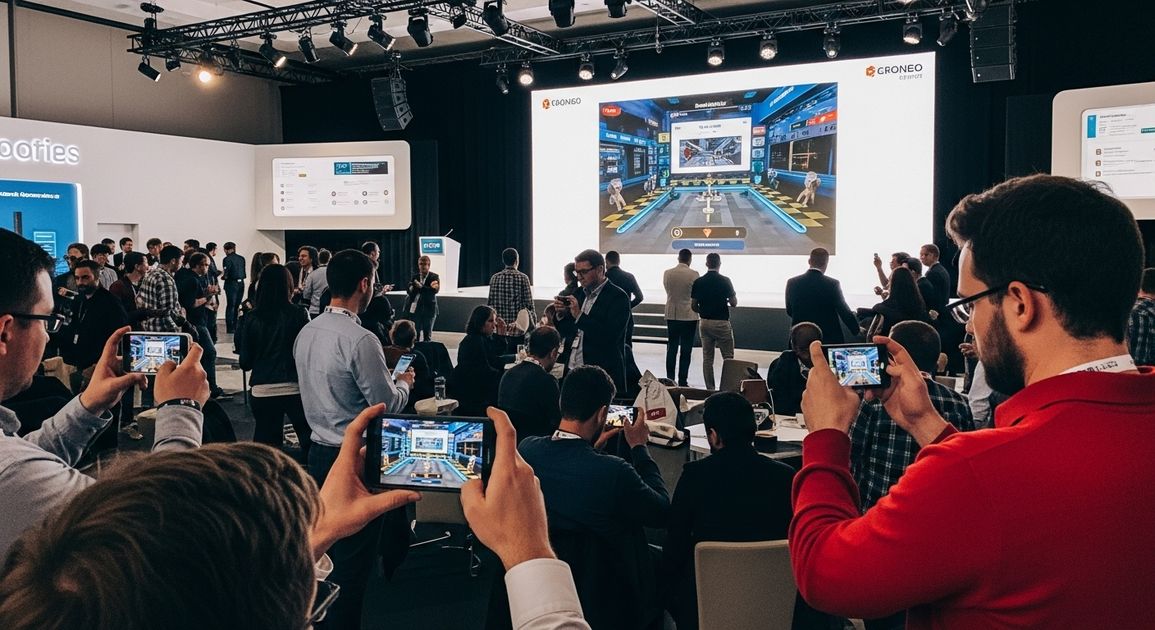
Product launches blur together in your customers' minds. They see the same email announcement format and the same social media posts and the same press release structure from every company in your space.
Custom branded games create actual engagement that people remember. Your prospects play them and share them with colleagues and remember your product because they interacted with something genuinely enjoyable whilst learning what you offer.
Why Standard Launch Tactics Struggle for Attention
Everyone receives dozens of product announcement emails weekly. Most get deleted unread. The ones that get opened get skimmed quickly. Nobody engages deeply with another product pitch in their inbox.
Social media posts vanish within minutes. Your announcement competes with thousands of other messages flooding people's feeds. Even your followers scroll past because the format looks identical to everything else. Paid promotion helps with visibility and still struggles to create meaningful engagement.
Webinars require significant commitment. People must register and show up at a specific time and sit through presentations. Most people who register never attend. The ones who do are typically already warm leads who know your company.
These tactics work reasonably well for building awareness. They struggle to create memorable experiences that stick in people's minds. Your prospects forget about your product within hours of seeing the announcement because nothing distinguished it from the fifty other announcements they saw that week.
What Branded Games Actually Achieve
A game related to your product creates an experience people genuinely remember. They spend five to ten minutes actively engaged with your brand. They learn about your product whilst enjoying themselves. Memory formation happens differently with interactive experiences compared to passive content consumption.
The game demonstrates your product's value proposition through gameplay mechanics. Someone playing learns what problem you solve and why it matters and grasps the concept without reading marketing copy or sales documentation.
A company launching productivity software built a time management game where players juggled competing tasks under deadline pressure. The game demonstrated the chaos their software eliminates. People understood the value proposition by experiencing the problem the software solves.
Mobile Performance Makes or Breaks Your Campaign
Most people will play your game on their phones. Industry data shows mobile traffic consistently exceeds desktop for most websites. Your prospects browse social media on mobile during commutes. They check emails on phones between meetings. They discover your game whilst scrolling on tablets in the evening.
Your game must run flawlessly on mobile devices from the very first interaction. Slow loading kills engagement instantly. People wait perhaps two seconds before giving up and scrolling past. The game needs to load and become playable within that window.
Touch controls require different design thinking than mouse clicks. Buttons need generous sizing for finger taps. Swipe gestures must feel natural and responsive. Text must remain readable on small screens without zooming. Someone playing on a phone during their lunch break should have exactly the same smooth experience as someone at a desktop.
Technical performance varies wildly across devices. Your game might run perfectly on the latest iPhone and struggle on a three year old Android phone. Test on actual devices across the range your audience uses. Older phones with limited processing power and slower connections represent a significant portion of your potential players.
Battery drain matters more than people realise. A game that consumes battery aggressively gets abandoned quickly. People notice when their phone heats up during gameplay. Optimise your game to run efficiently. Keep the technical demands reasonable. Simple graphics that load fast outperform elaborate animations that strain devices.
Data usage costs real money for people without unlimited plans. Heavy games that download large assets create friction. Build games that work with minimal data transfer. Cache assets intelligently. Let people enjoy your game without worrying about their data allowance.
Screen orientation affects how people play. Most mobile games work best in portrait mode because that is how people naturally hold their phones. Games forcing landscape rotation feel awkward for casual play. Design for portrait first unless your gameplay genuinely requires horizontal orientation.
The mobile experience is not secondary to desktop. Mobile is the primary way most people will encounter your game. Design for mobile first and adapt to desktop. The approach that prioritises mobile creates better engagement across all platforms.
Viral Potential Changes Campaign Economics
People share games naturally. They send links to colleagues who might find them interesting. They post scores on social media. They challenge friends to beat their results. This organic sharing reaches audiences you could never afford to target with paid advertising alone.
Traditional launch content rarely gets shared voluntarily. Nobody forwards product announcement emails to their network. Social posts about new features get minimal engagement beyond your existing followers. Press releases reach journalists and occasionally their readers. Organic reach stays frustratingly small.
A game with a leaderboard creates natural competition dynamics. People want to show their scores and get recognition for winning. Each share exposes your product to new potential customers. The campaign spreads without additional advertising spend.
One technology company saw their launch game played 40,000 times in the first week. Only 2,000 people were on their original email list. The game reached twenty times their existing audience through social sharing. Cost per impression dropped to pennies compared to their paid advertising benchmarks.
Mobile sharing happens effortlessly. Someone plays your game on their phone during a break. They enjoy it and immediately share the link via WhatsApp or LinkedIn or Twitter. The entire sharing process takes seconds. Desktop sharing requires more steps and happens less frequently. Mobile optimisation directly drives viral growth.
Lead Capture That Feels Willing
Games create willing information exchange. Players provide email addresses to see detailed results. They answer questions about their role to get personalised recommendations. They submit contact details to enter competitions. None of this feels invasive because they received entertainment value first.
Traditional lead capture forms feel purely transactional. Give us your email to download our whitepaper. Nobody genuinely wants another PDF sitting in their downloads folder. The value exchange feels unbalanced. Completion rates stay disappointingly low.
A game provides entertainment value before asking for anything. The lead capture happens after people already enjoyed themselves and want to continue the relationship. They willingly provide information to stay connected with something they found valuable.
Track which product features players explore in the game. See which scenarios they test repeatedly. This behaviour data qualifies leads better than any form field could. You know what interests them before the first sales conversation happens.
Mobile forms need special attention. Typing on phone keyboards feels tedious. Keep required fields to absolute minimum. Use dropdown selections where possible. Enable autofill for standard fields like email addresses. Make the submission process as frictionless as possible for someone playing on a small screen.
Development Timeline Reality
Simple games take six to eight weeks from brief to launch. Complex interactive experiences take three to four months. You need to start planning well before your actual launch date. Last minute game development produces poor results because quality suffers under time pressure.
The best campaigns integrate the game throughout the launch sequence. Teasers before release build anticipation. The game launches alongside the product. Post launch promotion extends the campaign momentum. This requires coordination across your entire marketing timeline.
Budget eight to thirty thousand pounds depending on sophistication level. Simple quiz games cost less. Interactive product simulations cost more. This sits alongside other launch costs like advertising spend and content creation. The question becomes whether the engagement depth justifies the investment compared to spending the same money on additional paid promotion.
Mobile optimisation adds development time and testing requirements. Developers must test on multiple devices and screen sizes and operating system versions. This testing phase cannot be rushed. Plan for it in your timeline. A game that works perfectly on desktop and fails on mobile wastes your entire investment.
Types That Work for Product Launches
Product education games teach your offering through direct interaction. Players learn features by using them in game scenarios. They understand capabilities through personal discovery. This works brilliantly for complex products that genuinely need explaining.
A kitchen appliance company launched a recipe challenge game where players used virtual versions of the new appliance to prepare dishes. They learned all its functions whilst playing. The game served as the product demonstration without feeling like a traditional sales pitch.
Problem simulation games show the issue your product solves. Players experience the pain point directly through gameplay. They understand why they need a solution. Your product becomes the obvious answer. This works well when the problem your product solves is not immediately obvious to prospects.
Brand personality games create emotional connections with your company. They might not explain product features directly. They build affinity through entertainment and shared values. This suits products where differentiation comes from brand positioning.
All these types must work brilliantly on mobile. A recipe game with tiny buttons frustrates players. A simulation with complex controls fails on touchscreens. A personality quiz with endless scrolling feels tedious on phones. Design every game type with mobile interaction patterns in mind from the start.
Integration with Your Broader Campaign
The game should weave throughout your entire launch. Every launch email should link to it prominently. Social posts should feature gameplay clips that make people curious. Press releases should mention the interactive experience as newsworthy. Paid advertising should drive traffic directly to the game.
Your launch landing page should feature the game prominently above the fold. Make it the first thing visitors encounter. People engage with games before reading long product descriptions. Hook them with interaction first. Explain detailed features after they are already interested and engaged.
Sales teams need the game as an ongoing tool in their conversations. They can demonstrate it during meetings. They can send links to prospects between touchpoints. The game becomes a shareable asset that extends its value far beyond the initial launch period.
Mobile links work everywhere. Sales reps can text game links directly to prospects. Email signatures can include QR codes that open the game instantly. LinkedIn messages can share the link with one tap. The mobile optimised game travels through every channel your team uses naturally.
Measuring Campaign Success
Track plays compared to other engagement metrics. Compare game plays to email open rates. Look at time spent playing compared to time spent on landing pages. Games typically win dramatically on engagement depth because people actively participate for several minutes.
Monitor social sharing rates carefully. See how many people share the game organically with their networks. Compare this to shares of traditional launch content like blog posts or announcement pages. The difference shows the viral potential advantage clearly.
Measure lead quality from game players specifically. Track their progression through your sales funnel over time. Compare conversion rates to leads from other sources like content downloads or webinar attendees. Game engaged leads typically convert better because they already understand your product before the first sales conversation.
Calculate cost per engaged prospect by dividing total campaign spend by number of people who spent meaningful time with your brand. Games reduce this number substantially for most companies because each play represents genuine engagement.
Break down all metrics by device type. See what percentage of plays happen on mobile versus desktop. Track completion rates across devices. Monitor sharing behaviour by platform. This data shows whether your mobile optimisation actually works and where improvements might help.
Common Pitfalls That Reduce Results
Making games too complex reduces participation significantly. People should understand gameplay within seconds of starting. Complicated rules mean people leave before they even begin playing. Simple mechanics keep engagement rates high across different audience types.
Disconnecting the game from the product wastes the educational opportunity. Generic entertainment might get plays from curious people. It fails to educate them about your offering. The gameplay must relate directly to what you sell and the problems you solve.
Neglecting mobile performance destroys your campaign before it starts. A game that loads slowly on phones loses half your audience immediately. Touch controls that feel clunky frustrate players. Text that is unreadable on small screens creates immediate abandonment. Test ruthlessly on actual mobile devices throughout development.
Forgetting post launch promotion wastes the asset you built. The game remains valuable long after launch week ends. Keep promoting it through ongoing campaigns. Keep driving traffic to it from multiple channels. Extend the campaign life far beyond the initial announcement period.
When Games Make Sense for Your Launch
Complex products that need explaining benefit enormously from game based launches. The game becomes your primary education tool. People understand through hands on interaction what they would never grasp from reading feature lists or watching demonstration videos.
Competitive markets where differentiation proves difficult favour game campaigns. Everyone makes similar claims about their products. Your game creates a unique experience that stands out. People remember you because you gave them something genuinely different from every other announcement.
Substantial launch budgets with room for experimentation suit game development well. When you are already spending fifty thousand pounds on the launch across multiple channels, allocating fifteen thousand to a game makes strategic sense. The engagement return typically justifies the spend based on lead quality and campaign memorability.
Mobile first audiences make games especially powerful. When your target customers spend most of their day on phones, a mobile optimised game meets them where they already are. They can play during spare moments throughout the day. The convenience drives higher engagement than tactics requiring desktop access.
When Traditional Tactics Serve Better
Simple products with obvious value propositions do not require games. When someone understands your offering in thirty seconds, a game adds unnecessary complexity. Keep the launch straightforward and focus on clear communication.
Limited budgets require careful prioritisation. When your total launch budget is five thousand pounds, spending most of it on a game leaves nothing for promotion and distribution. Focus on proven low cost tactics that fit your constraints.
Particularly serious industries might find games feel mismatched with their brand. Know your specific audience well. Some sectors embrace interactive content enthusiastically. Others consider it unprofessional for their context. Match your tactics to your market expectations.
The Long Term Asset Advantage
Traditional launch campaigns expire quickly by design. The email gets sent and the posts go live and everything finishes within a few weeks. You start from zero for the next launch because nothing remains from the previous campaign.
A well designed game continues working indefinitely as a marketing asset. New prospects discover it months later through search and social sharing. It remains on your website as an ongoing engagement tool. Sales teams continue using it in conversations long after launch. The value extends far beyond launch week into your ongoing marketing infrastructure.
One company built a launch game three years ago that still generates 500 plays monthly from new prospects. People find it through organic search. Sales representatives share it regularly in their outreach. The game became permanent marketing infrastructure. The initial launch investment continues paying returns month after month.
The mobile optimised game works everywhere your prospects go. They can play it during a commute and return to it later on desktop and share it from their phone during a meeting. The cross platform flexibility makes the asset more valuable over time as different people discover it through different channels.
Making Your Launch Decision
Ask whether your launch needs deeper engagement than standard tactics typically provide. Ask whether your product genuinely benefits from interactive explanation. Ask whether your budget realistically supports game development alongside other essential launch activities.
When your launch risks blending into competitor noise using standard tactics, games offer genuine differentiation. The question becomes whether the investment makes strategic sense given your specific budget constraints and product complexity.
Product launches that get remembered long term create something genuinely worth remembering. Games provide that memorable element people actually talk about. Your prospects forget another announcement email within hours. They remember the entertaining experience where they learned about your product by actually using a simulation of it.
Your next launch can follow the standard playbook everyone uses. Email announcement and social media posts and press release distribution. Nobody will remember it a week later. A custom game makes people stop what they are doing and engage properly with what you built. That engagement transforms awareness into genuine interest and understanding.
The mobile optimised game meets your prospects where they already spend their time. They play during spare moments throughout their day. They share it instantly with colleagues. They remember your product because they interacted with it properly on the device they use constantly. That mobile first approach turns a product launch into an experience people actually want to participate in and tell others about.