
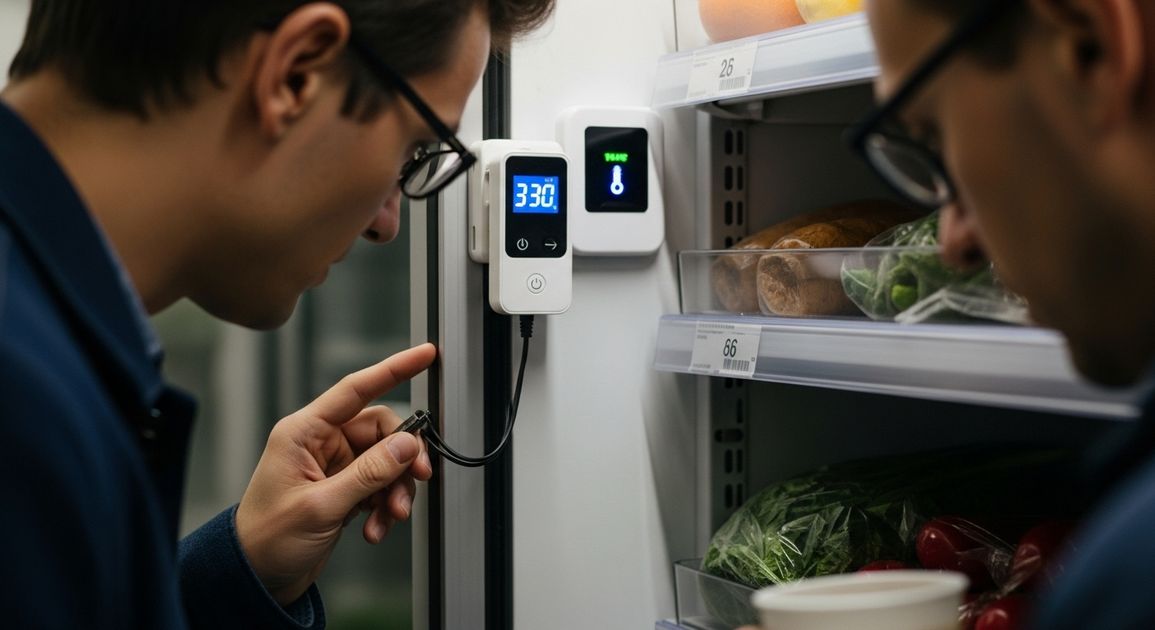
Your team does temperature checks three times daily and records them on paper logs. They complete opening and closing inspections with clipboards. When environmental health visits, you scramble to find specific records from folders of completed checklists. When head office asks about compliance across sites, compiling the answer takes hours.
This paper-based approach to quality control works until you need to access historical data quickly, spot trends across locations or prove compliance under pressure. Digital quality control systems solve these problems by capturing inspection data electronically with immediate visibility and proper audit trails.
Why food retail still uses paper
Paper inspections feel simple. Print a checklist, grab a clipboard, tick boxes as you go, file it when done. No technology to learn. No tablets to charge. No systems that might fail.
This simplicity comes with hidden costs. Filed paperwork is hard to search. Compliance reports require manually reviewing hundreds of checklists. Spotting patterns means someone sitting with folders full of forms looking for trends. Lost or damaged paperwork means gaps in audit trails.
As your business grows beyond single sites, paper-based quality control scales poorly. Visiting every location to check compliance takes time. Identifying which sites need attention requires reports that don't exist because compiling them from paper is impractical.
What digital quality control actually means
Digital systems replace paper checklists with electronic forms completed on tablets or phones. Staff work through the same inspections they always did. The difference is data gets captured digitally with timestamps, locations and photos automatically attached.
This digital capture enables immediate visibility. Managers see completion status across all sites in real time. They spot missed inspections as they happen rather than discovering gaps weeks later when reviewing paperwork. Problem patterns become visible through dashboards rather than requiring manual analysis of paper records.
Audit trails exist permanently in searchable databases. Environmental health asks about a specific date three months ago and you pull those records in seconds rather than searching through filing cabinets. Compliance questions get answered immediately with proper documentation.
Temperature monitoring that actually helps
Temperature logs on paper tell you what happened after the fact. Someone records temperatures every few hours. If equipment failed between checks, you don't know. If temperatures drifted out of range overnight, you discover it the next morning when stock may already be compromised.
Digital temperature monitoring with connected sensors provides continuous visibility. Alerts notify you immediately when temperatures exceed thresholds. You respond whilst stock is still safe rather than discovering problems too late.
Automated monitoring also eliminates the compliance risk of forgotten manual checks. Sensors record continuously regardless of whether staff remember. The data shows uninterrupted monitoring rather than gaps where manual checks got missed during busy periods.
Integration with inventory systems lets you track which products were at which temperatures when. If you need to identify potentially affected stock after an incident, you have precise records of what was where during the temperature excursion.
Inspections that adapt to what's found
Paper checklists are static. Everyone gets the same questions regardless of what's discovered. Digital inspections include conditional logic that adapts based on responses.
Find a cleanliness issue during opening inspection and the system prompts immediate corrective action documentation. Identify equipment damage and it triggers maintenance requests automatically. Spot expired stock and it logs details and requires disposal confirmation.
This adaptive approach ensures problems get handled properly as they're discovered. The system guides users through appropriate responses rather than relying on them remembering correct procedures for every situation.
Follow-up inspections can reference previous findings automatically. Check whether yesterday's cleaning issue was resolved. Verify that flagged equipment got repaired. The system tracks issues through to resolution rather than each inspection being isolated.
Photos and evidence that matter
Paper inspections rely on written descriptions. "Spillage in cold room" means different things to different people. Digital systems capture photos showing exactly what was found.
Visual evidence helps enormously when assessing whether corrective actions were sufficient. Compare the photo showing the original problem with images after remediation. See whether cleaning met standards rather than relying on subjective descriptions.
Photos also support training by showing examples of issues staff should watch for. New team members see what proper standards look like through images from actual inspections rather than abstract descriptions.
Timestamped photos with location data provide reliable evidence for compliance purposes. Environmental health queries get answered with actual images showing conditions at specific times.
Multi-site visibility and consistency
Managing quality across multiple locations through paper-based systems means trusting each site maintains proper standards without real-time visibility into their actual compliance.
Digital systems show you exactly what's happening at every location. Dashboard views display which sites completed required inspections today. Which locations have outstanding issues needing attention. Where compliance trends are improving or declining.
This visibility lets you spot problems early. A site consistently missing evening inspections needs investigation before it becomes a compliance issue. Locations showing increasing temperature excursions might have equipment needing maintenance.
Standardisation improves when everyone uses the same digital checklists. You ensure all sites follow identical inspection procedures rather than each location developing slightly different paper forms over time.
Compliance reporting that doesn't take days
Paper-based compliance reports require someone manually reviewing forms and compiling statistics. How many inspections were completed last month? What percentage found issues requiring corrective action? How quickly were problems resolved?
Answering these questions from paper records takes hours or days. Digital systems generate reports instantly. Filter by date range, location, inspection type or issue category. Export for regulatory submissions or internal review.
This immediate reporting capability transforms how you use quality data. Instead of quarterly manual reports, you monitor compliance continuously. Instead of discovering trends after they've become serious, you spot patterns as they emerge.
Audit preparation changes from frantic paper searching to generating comprehensive reports showing complete inspection history with all supporting evidence and corrective actions.
Corrective action tracking
Finding issues during inspections matters less than ensuring they get resolved. Paper systems rely on notes and memory to track whether problems were fixed. Things get missed or forgotten.
Digital systems track corrective actions from identification through resolution. Issue gets flagged during inspection. System assigns it to appropriate person. Follow-up reminders ensure it doesn't get forgotten. Resolution gets documented with evidence.
This closed-loop tracking proves problems get addressed properly rather than just identified. Audit trails show what was found, what corrective action was taken and when the issue was verified as resolved.
Integration with existing operations
Quality control doesn't exist in isolation. Issues found during inspections trigger other business processes. Equipment failures need maintenance. Stock problems affect inventory. Staff issues require management attention.
Digital quality systems integrate with your other platforms. Temperature excursions automatically create maintenance requests in your facilities management system. Stock issues update inventory records. Recurring problems trigger management alerts or training requirements.
This integration means quality control data drives appropriate actions across your business rather than sitting in isolated inspection records.
Mobile-first for how teams actually work
Quality inspections happen on shop floors, in storage areas and during deliveries. Staff doing inspections are moving around, often with their hands full and working in various lighting conditions.
Digital inspection tools need working properly on mobile devices. Large touch targets for users wearing gloves. Clear displays readable in bright or dim conditions. Offline capability for areas with poor connectivity. Quick photo capture without fumbling through menus.
This mobile-first design ensures digital systems work as easily as clipboards in actual working conditions. Staff adoption depends on tools fitting their reality rather than forcing them to adapt to awkward interfaces.
Training and adoption
Teams comfortable with paper checklists often resist digital systems initially. The paper method is familiar. Technology feels complicated. Change creates stress.
Successful adoption requires showing that digital inspections make work easier, not harder. The system guides them through inspections. It remembers to ask about things they might forget. It handles documentation automatically. Photos are clearer than written descriptions.
Start with your most tech-comfortable staff. Let them demonstrate that digital inspections work smoothly. Early adopters become advocates helping colleagues see benefits rather than threats.
Keep initial rollout focused. Convert one inspection type to digital first. Get that working properly before expanding to other checklists. Success builds confidence for tackling more complex quality processes.
When digital quality control makes sense
Single-site operations with simple compliance requirements might manage fine with paper. The benefits of digital systems justify investment when you're managing multiple locations, dealing with complex regulatory requirements or spending significant time compiling compliance reports manually.
Food retail businesses with more than a few locations benefit enormously from real-time visibility and standardised processes. Multi-site restaurant groups, supermarket chains, food wholesale operations all gain from digital quality control.
Businesses facing increased regulatory scrutiny or working with customers demanding detailed compliance documentation need proper digital audit trails. Paper records become insufficient when proving compliance must be fast and comprehensive.
Operations where temperature control is critical benefit particularly from automated monitoring. The continuous visibility and immediate alerts prevent problems that manual checking might miss.
Implementation without disrupting operations
Moving from paper to digital quality control doesn't require shutting down your quality programme whilst implementing new systems. Digital and paper can run in parallel during transition.
Start with one site or one inspection type. Run digital alongside paper until you're confident everything works properly. Staff become comfortable with new tools whilst maintaining existing processes as backup.
This gradual transition reduces risk and allows time for refinement based on actual use. You discover what works well and what needs adjusting before full deployment.
Configuration flexibility matters because your inspection processes are specific to your business. The digital system should match your actual requirements, not force you into standardised processes designed for average operations.
Measuring the difference
Digital quality control provides metrics paper systems never could. Inspection completion rates across locations. Average time to close corrective actions. Frequency of specific issue types. Correlation between environmental conditions and product problems.
These insights help improve operations beyond just meeting compliance requirements. Identify which locations struggle with specific aspects of quality control and provide targeted support. Spot equipment showing increasing problems before failures happen. Understand which staff need additional training.
The data transforms quality control from checkbox exercise to continuous improvement process. You're not just proving compliance. You're genuinely making operations better through insights previously hidden in paper records.
Paper-based quality control worked for years and still functions for simple operations. As regulatory requirements increase, business scales across multiple locations or the need for real-time visibility becomes critical, digital systems provide capabilities paper can't match. Real-time data, proper audit trails and actual insights replace filing cabinets full of forms nobody reviews.
Running food retail operations that still use paper quality control? Contact us at batchbinary23@gmail.com to discuss how digital inspection systems could improve your compliance and visibility.