
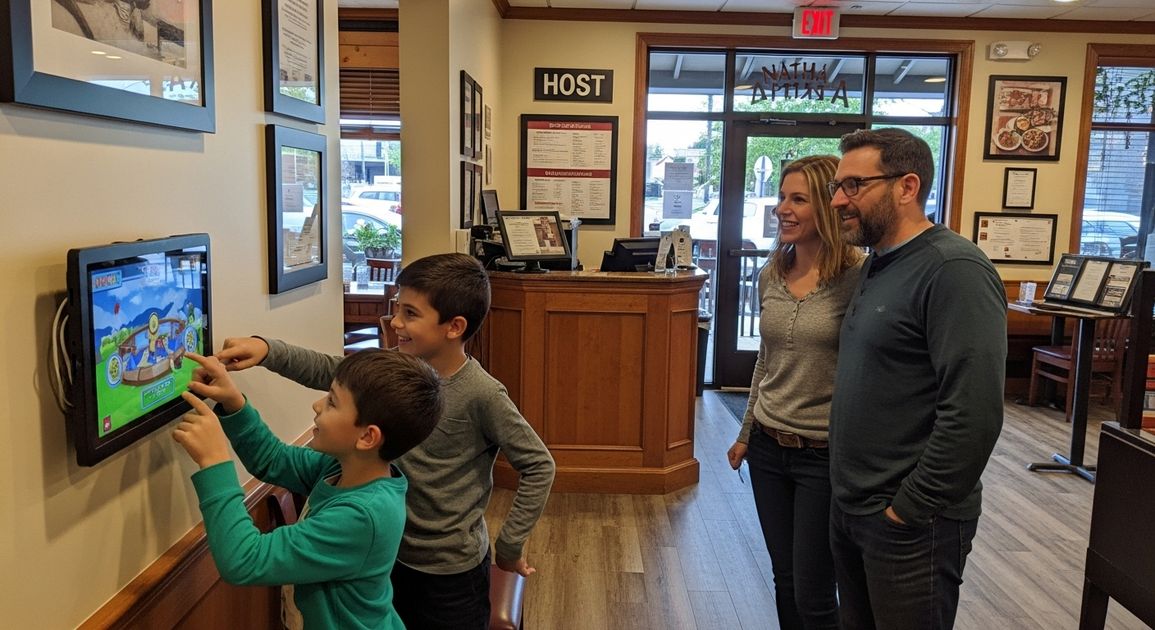
Saturday night arrives and thirty people stand in your waiting area checking their watches. Some will leave for competitors and others will stay and mention the excessive wait in their reviews later.
The wait time itself cannot change. Your dining room holds a fixed number of tables and parties take the time they need to finish meals. You cannot rush this without damaging the entire experience.
Tablet games change how people perceive waiting. Engaged customers feel like time passes faster and they arrive at their table in better moods. Reviews mention the entertaining wait area and the same thirty minutes creates a completely different experience.
How Wait Times Affect Your Restaurant
Online reviews mention wait times constantly. Customers frustrated by waiting express it publicly and one person writing about a forty minute wait discourages dozens of potential diners from visiting.
People waiting whilst bored form negative impressions before sitting down. They start the meal already irritated and this colours their entire experience. Food tastes worse to them and service feels slower and the negative frame persists throughout.
Groups waiting get restless. Children become difficult and adults get impatient. Staff bear the brunt of this frustration and the waiting area creates tension that spreads through the entire establishment.
Some people will not wait at all. They leave for competitors and you lose the revenue. Peak times see the highest losses and these are exactly the moments when you need every customer.
What Tablet Games Actually Achieve
Distraction changes time perception. Someone playing a game notices time less and thirty minutes playing feels shorter than thirty minutes standing. This psychological effect is measurable and significant.
Games create positive associations. People enjoying themselves whilst waiting arrive at tables in good moods. The experience starts positively and this frame carries through the meal. Reviews reflect the overall positive experience they had.
Children stay occupied. Parents appreciate this enormously and a game engaged child means a relaxed parent. Family dining becomes more pleasant for everyone and staff deal with calmer customers.
The waiting area becomes a feature people talk about. They mention it in reviews and photograph it and share it on social media. Your restaurant gains a talking point and the entertainment becomes part of your brand.
Game Formats for Restaurants
Simple puzzle games work brilliantly. Customers pick them up instantly with no instructions needed. Someone can play for three minutes or thirty and the game adapts to variable wait times.
Trivia games create social interaction. Groups play together and discuss answers and compete. This turns waiting from a boring individual experience into an engaging group activity.
A chain restaurant in Manchester implemented trivia tablets. Groups waiting played together and staff noticed an immediate reduction in complaints. Reviews began mentioning the fun waiting area and customer satisfaction scores improved measurably.
Restaurant themed games reinforce branding. A pizza restaurant offers a pizza making game and a sushi place provides a sushi matching challenge. The game ties directly to the dining experience and brand reinforcement happens through play.
Quick arcade style games suit short waits. Someone waiting ten minutes wants immediate engagement. Classic game formats work perfectly with no story to follow and no progress to track. Just instant play.
Implementation Details
Tablets need protective cases. Restaurant environments are demanding and spills happen and drops occur. Rugged cases rated for hospitality use are essential and consumer tablets without protection fail quickly.
Mounting matters enormously. Wall mounted units prevent theft and keep tablets accessible. They create dedicated game stations in the waiting area. Loose tablets get damaged or disappear.
Charging infrastructure needs planning. Tablets need power and dead devices frustrate customers more than no tablets at all. Install charging stations where tablets mount and keep devices ready.
WiFi quality affects everything. Games need reliable internet and laggy gameplay annoys people. Invest in proper restaurant WiFi because the tablets are pointless without solid connectivity.
Hygiene creates challenges. Screens get dirty so provide screen cleaning stations. Make sanitising wipes visible and available. Post pandemic customers notice cleanliness and dirty tablets damage your image.
Measuring Impact
Track review mentions of wait times before and after implementation. Count comments about waiting and see whether they decrease. Most restaurants see 40% to 60% reduction in wait related complaints.
Monitor customer walkaway rates during busy periods. How many people leave before getting tables and compare before tablets and after. Good implementations reduce walkaways by 20% to 30%.
Survey seated customers about their waiting experience. Ask whether they found the wait acceptable and see if scores improve post implementation. Direct feedback reveals perceived changes in wait quality.
Watch social media mentions. People photograph interesting waiting areas and share positive experiences. Track whether your restaurant gets mentioned for entertainment and viral moments create free marketing.
Staff satisfaction improves measurably. Ask hosts whether they deal with fewer complaints and see if they feel less stressed during busy shifts. Happier staff provide better service and the benefits compound throughout the restaurant.
Common Implementation Pitfalls
Buying cheap consumer tablets guarantees problems. They break within months in restaurant environments. Pay for proper equipment because the initial savings disappear in replacement expenses.
Forgetting to train staff creates confusion. Hosts need to explain tablets to customers and handle technical issues and encourage usage. Untrained staff cannot support the system effectively.
Placing tablets poorly wastes the investment. Hidden in corners and difficult to access and uncomfortable to use whilst standing. Location determines whether people engage and prime waiting area placement is essential.
Allowing tablets to become dirty destroys the appeal. Nobody wants to touch grimy screens. Regular cleaning must be protocol and make it someone's explicit responsibility. Neglected tablets reflect poorly on restaurant hygiene.
Forgetting about content updates makes games stale. The same games for years bore regular customers. Rotate content and add seasonal games and keep the experience fresh. Stagnant content loses effectiveness.
What Customers Actually Want
Easy immediate play matters most. No account creation and no downloads and no lengthy instructions. Touch the screen and play. Any friction reduces engagement dramatically.
Variable session lengths accommodate different waits. Someone might play for five minutes and someone else for thirty. Games need to work equally well for both with no punishment for stopping mid game.
Family friendly content is mandatory. Children use these tablets and content must be completely appropriate. One inappropriate game damages your reputation severely so vet everything carefully.
No personal information requests. People resist giving data to play. Keep it anonymous with no email capture and no registration. Pure entertainment without strings because privacy concerns kill engagement.
Integration with Restaurant Operations
Use tablets for more than just games. Display menu teasers and show daily specials and promote signature dishes. The device becomes a marketing tool between game sessions.
Collect feedback through tablets. Quick satisfaction surveys and simple star ratings. People waiting have time to provide input and you gather data whilst entertaining them.
Enable reservations through tablets. Someone waiting without a booking can join the queue digitally and get notifications when tables approach availability. The system reduces perceived wait time through transparency.
Loyalty programme integration makes sense. Players can check points and see rewards available and learn about member benefits. The tablet promotes your retention programmes naturally.
Where This Approach Thrives
Restaurants with consistent wait times benefit most. If you regularly have people waiting fifteen minutes or more then tablets improve their experience significantly. Rare waits do not justify the investment.
High volume establishments see best returns. More waiting customers mean more people using tablets and the per person benefit grows with scale. Small quiet restaurants gain less advantage.
Family focused restaurants need tablets. Parents with young children face the hardest waits and entertainment for kids creates massive satisfaction improvements. This demographic values tablets enormously.
Premium establishments can afford better implementations. Custom branded games and high end tablets and polished presentations. The investment matches the overall experience level.
Alternative Approaches for Different Situations
Very short waits under ten minutes barely justify tablets. People hardly begin playing before being seated. Simple comfortable seating and pleasant atmosphere suffice for quick waits.
Small restaurants with minimal waiting rarely need digital solutions. If you seat people immediately most nights then tablets gather dust. Focus resources on challenges you actually face.
Very upscale fine dining might find tablets inappropriate for their atmosphere. Some establishments cultivate specific ambiences and digital entertainment might clash with certain brand identities. Match solutions to your positioning.
Choosing Your Approach
Calculate your current impact of wait related challenges. Lost customers and negative reviews and staff stress. Work out what these issues affect monthly and compare to what tablets might improve.
Consider your customer demographics. Families with children benefit enormously from tablets. Young adult crowds appreciate entertainment too and older diners often enjoy engagement. Your specific customers determine value.
Think about your wait patterns. Consistent weekend rushes justify tablets. Unpredictable sporadic waits make the case weaker. Frequency and duration of waits determine potential return.
Evaluate your brand positioning. Does digital entertainment fit your image and will your customers embrace it. Some restaurants thrive on traditional approaches and others benefit from modern touches. Be honest about fit.
Restaurant waiting times create genuine challenges. Customers get frustrated and reviews turn negative and revenue gets lost. These outcomes affect you every busy service.
Tablet games transform dead time into engagement. The wait becomes an experience people enjoy and satisfaction improves and complaints decrease and reviews get better. The same wait time creates different customer reactions.
Your waiting area currently frustrates people during busy periods. Tablets give them something enjoyable to do and that shift from frustration to entertainment changes how they experience your restaurant. The meal starts better because the wait felt better and that positive beginning colours their entire visit.